
Gardening
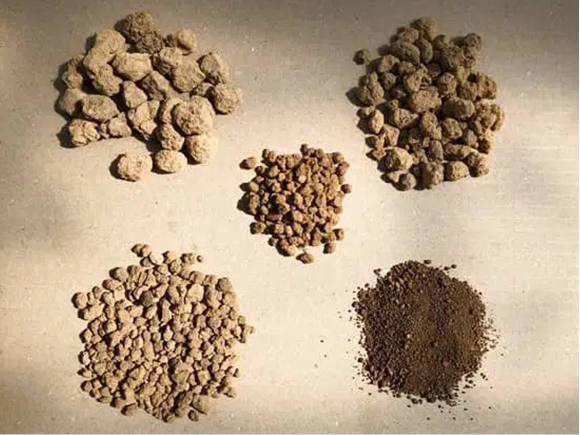
Hard Akadama soil
PR テキストが入ります。PR テキストが入ります。PR テキストが入ります。PR テキストが入ります。PR テキストが入ります。
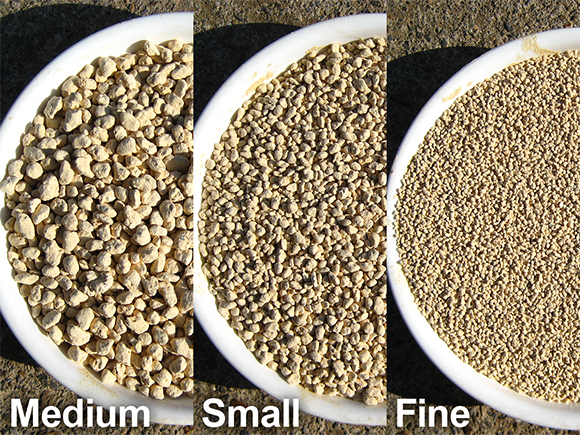
Kanuma soil
PR テキストが入ります。PR テキストが入ります。PR テキストが入ります。PR テキストが入ります。PR テキストが入ります。
Hard Akadama soil
“Hard Akadama soil” is hardened by baking Akadama soil at high temperature. Compared to other akadama soil, the grains are very hard, so they do not collapse easily, and they are characterized by their long-lasting breathability and drainage. It is often used as a bonsai that is not repotted often and as a substrate for aquariums. Hard Akadama soil is also sold by size from fine grain to large grain.
Product Details
This is sterilized Akadama clay made by firing red clay at about 800 to 900 degrees and sifting it out. It is said to be even harder than general hard Akadama soil.
It has excellent water retention and breathability, and is easy to use.
How to use Akadama soil For ornamental fish
Akadama soil, which is often used for breeding freshwater fish, is suitable for creating slightly acidic water quality.
In addition, the red clay ball is porous and can harbor bacteria, so it can be expected to have the effect of stabilizing water quality.
Gardening pot (how to make potting soil)
Ingredients (basic botanical formulation)
・Akadama soil (60% to 70%)
・Leaf soil (30-40%)
・Large plastic bag
Usage
- It is recommended to sieve the Akadama soil and the humus soil separately.
- Carefully mix the above ingredients in a large plastic bag or the like so that they do not fall apart.
- Store items that will not be used immediately in a place away from rain and direct sunlight.
Akadama soil has high drainage and is weakly acidic and can be used for many plants. It is inorganic and hygienic, so it can be used for indoor foliage plants and has the effect of suppressing the growth of germs and insects.
Although it is similar to Kanuma soil, it is a pumice stone that can be collected from the same Kanto loam layer. It also has high drainage, fertilizer retention, water retention, breathability, and clay.
The difference is that Kanuma soil is strongly acidic soil. It is often used for azaleas that like acidity.
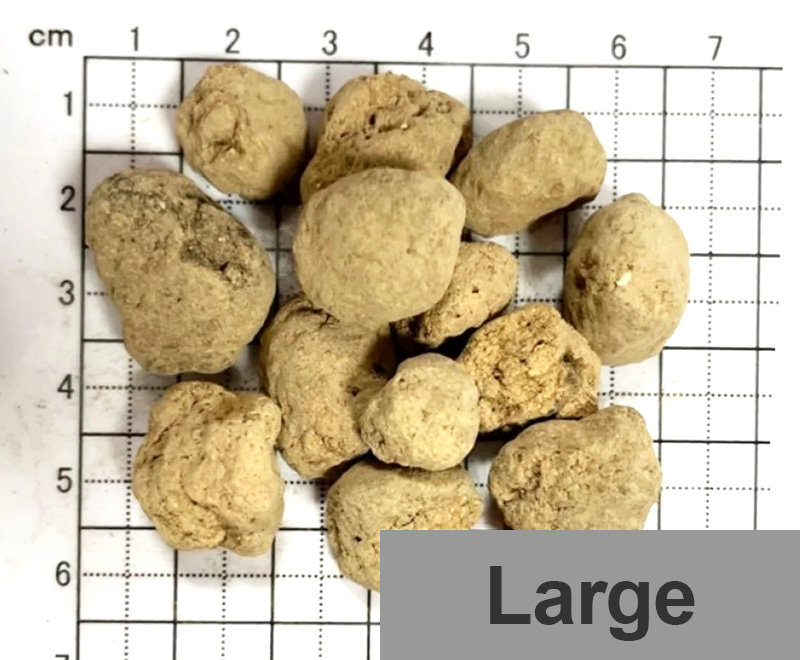
Large grain
It is mainly used as a pot bottom stone. The size is about 1 to 2 cm. It is characterized by its large size and excellent drainage.
When mixing with potting soil, etc., it is recommended to mix in a small amount, as if you mix a large amount of medium or small grains, the water retention will be poor.
There is also a good point because a small amount increases breathability and drainage.
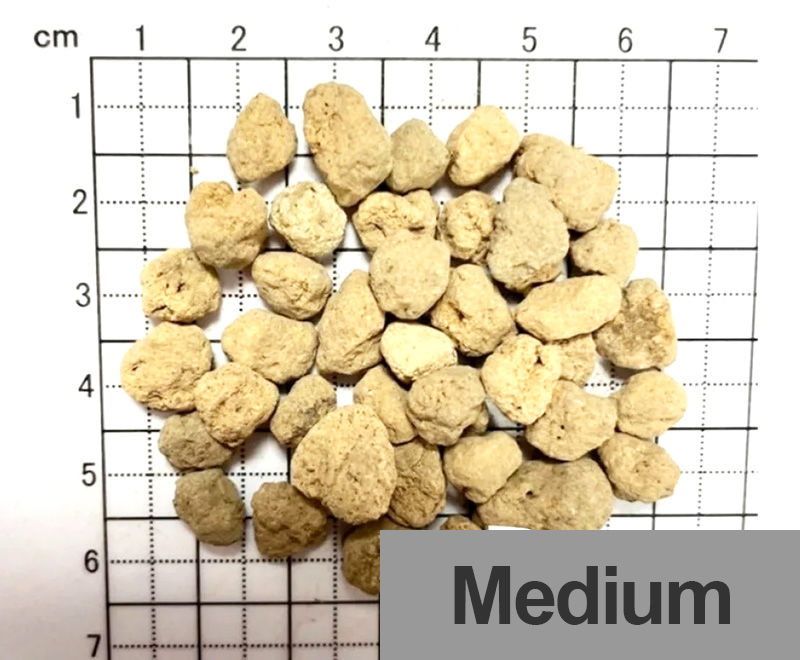
Medium grain
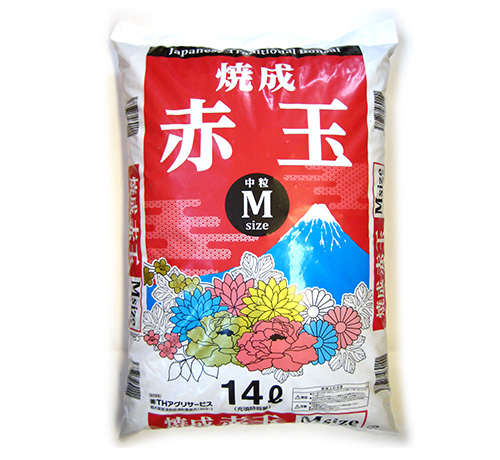
It is a size that is often used, such as being used as a pot bottom stone or mixed with potting soil.
The size is about 6 to 10 mm. I often put medium grains on the surface of the pot to prevent the occurrence of crumbs and to use it as a measure of whether there is enough water.
It can be mixed with potting soil, but it has more water retention than large seeds, but it lacks water retention compared to small seeds.
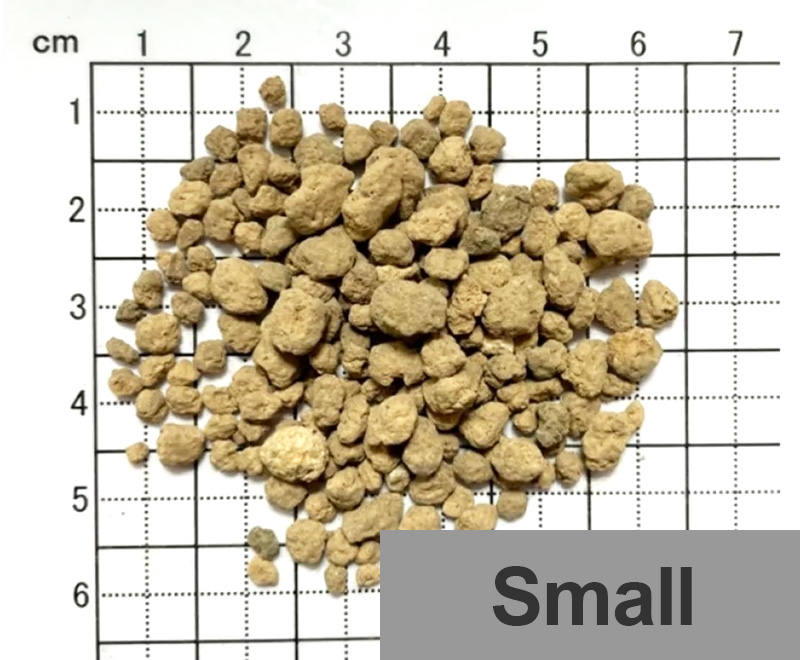
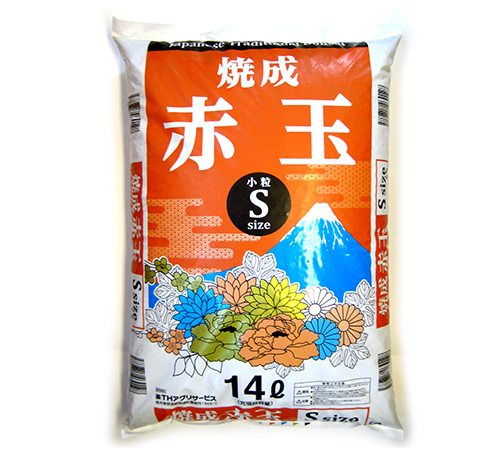
Small grain
This is the most commonly used size of Akadama clay. The size is about 3 to 6 mm. It has higher water retention than medium grains and has moderate drainage, so it is also recommended for potting soil.
In addition, since the grains are small, the roots of plants are stable and easy to spread, allowing plants to stand firmly. It is also used as soil for bonsai and succulent plants.
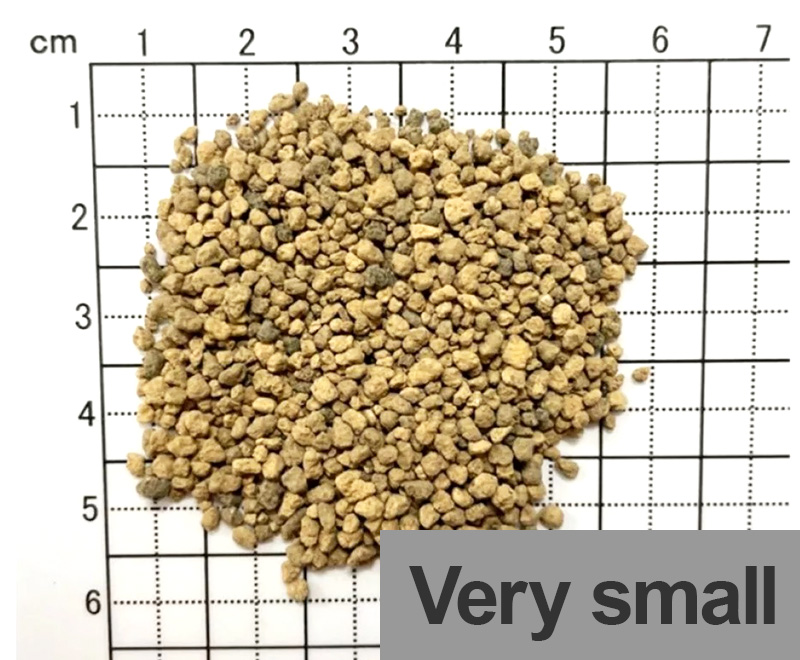
Very small grains/Fine grains
Mostly used for cuttings and cuttings. The size is about 1 to 3 mm. It has higher water retention than small grains and has poor drainage, so if you mix it with Akadama soil of different sizes other than cuttings, drainage will increase.
For plants that absorb water well, mix fine grains to moisten the soil.
Akadama soil is a universal soil for gardening and has been used since ancient times. It is brown, granular, and weakly acidic. It has excellent air permeability, water retention, and fertilizer retention, and does not contain fertilizer.
Because it is inorganic, it is also used as a substitute for soil for turtles, killifish, and goldfish in addition to gardening. I use soil exclusively for goldfish and killifish.
In addition, since it is inorganic, it is difficult for bacteria to grow, so if you sprinkle it on the surface of foliage plants, it will help prevent the growth of bacteria, mold, and insects.
Also, just by looking at it, if it’s thick, it’s still moist, and if it’s thin, it’s dry! And it’s easy to see how dry the soil is, so it’s convenient to sprinkle it on the surface.
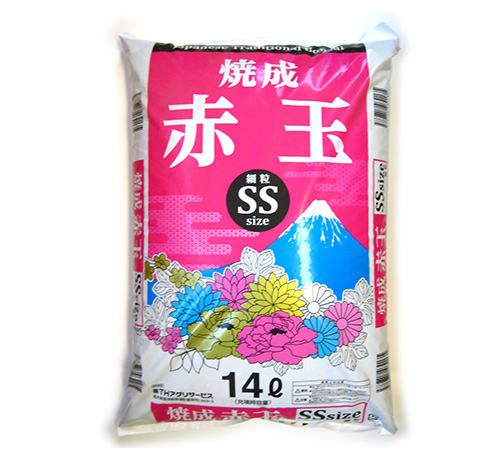
If you would like to purchase, please write the product name, size, and quantity in the message field.
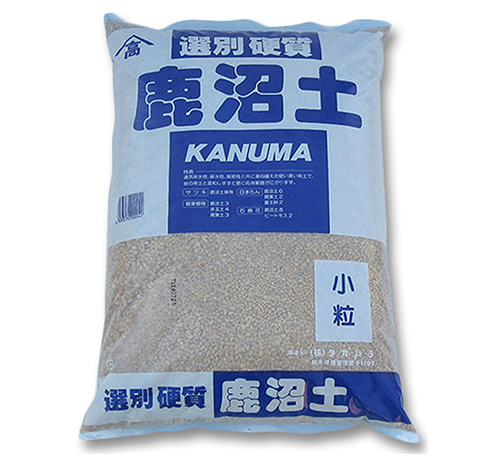
Kanuma soil
Kanuma soil is made from pumice stone native to Kanuma City, Tochigi Prefecture, and is characterized by high drainage. Like Akadama soil, Kanuma soil has excellent air permeability and drainage.
The grains are relatively hard to crush, so there is a feature that drainage is difficult to fall.
Kanuma soil is said to last longer than Akadama soil because it is less likely to collapse and has good air permeability.
Also, since the color changes when it is wet and when it is dry, it is easy to determine how dry the soil is.
Product Details
The biggest difference between Kanuma soil and Akadama soil is that Akadama soil is weakly acidic, while Kanuma soil is acidic. Therefore, when growing plants that prefer acidic soil, Kanuma soil is used instead of Akadama soil, and when used in combination with Akadama soil, a large amount of Kanuma soil is added.
Kanuma soil is slightly more acidic than Akadama soil, with a pH of around 4-5.
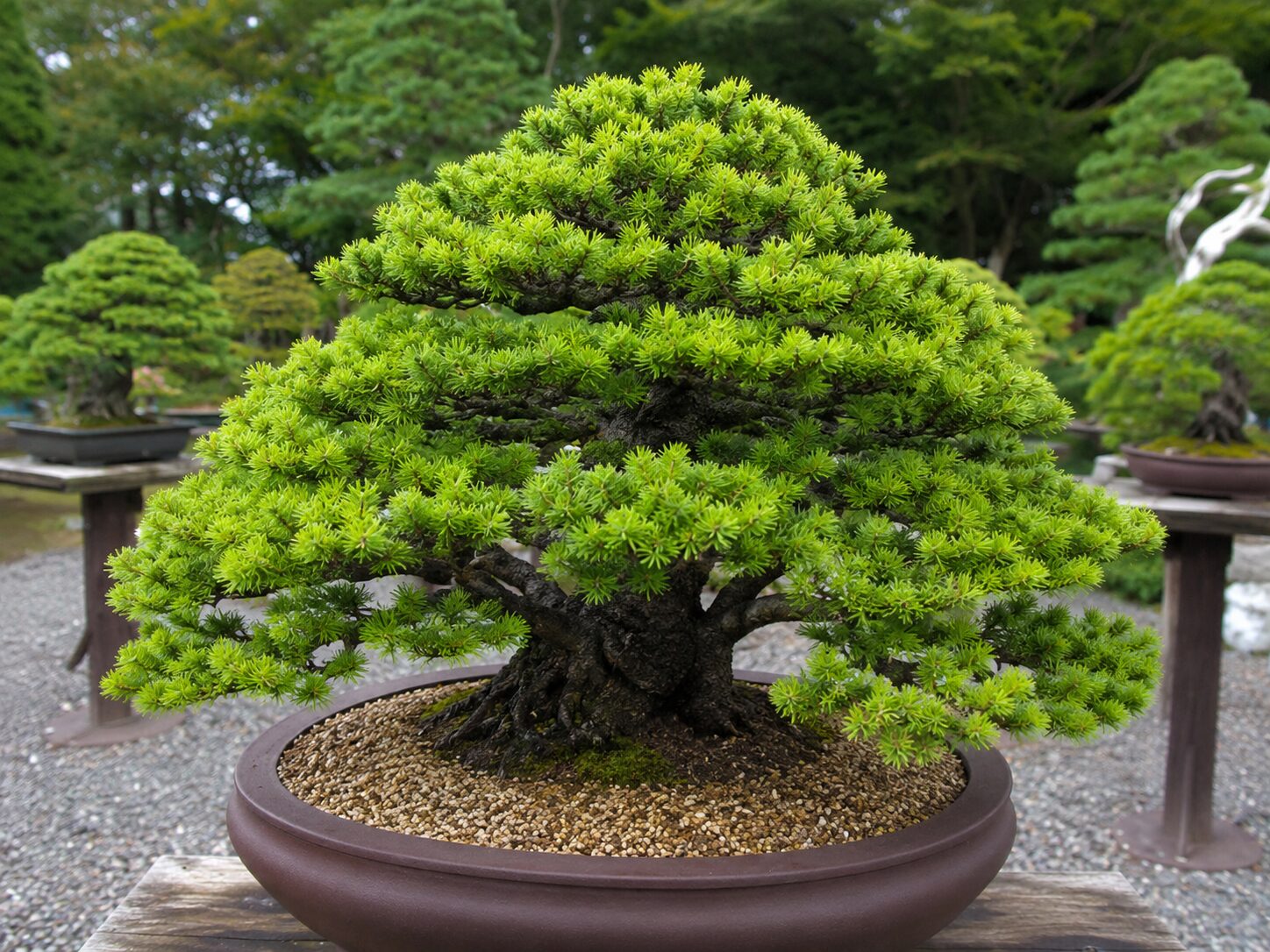
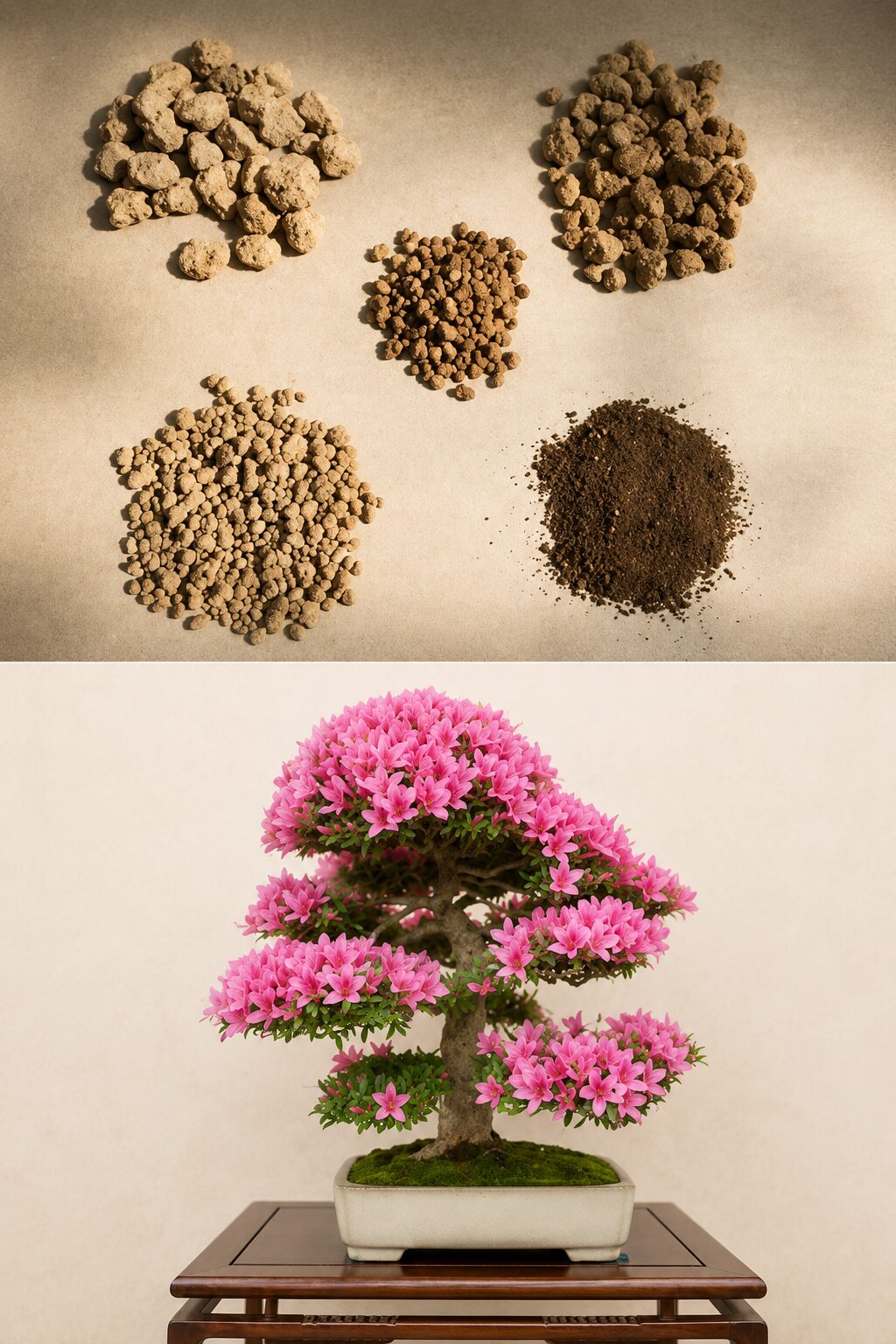
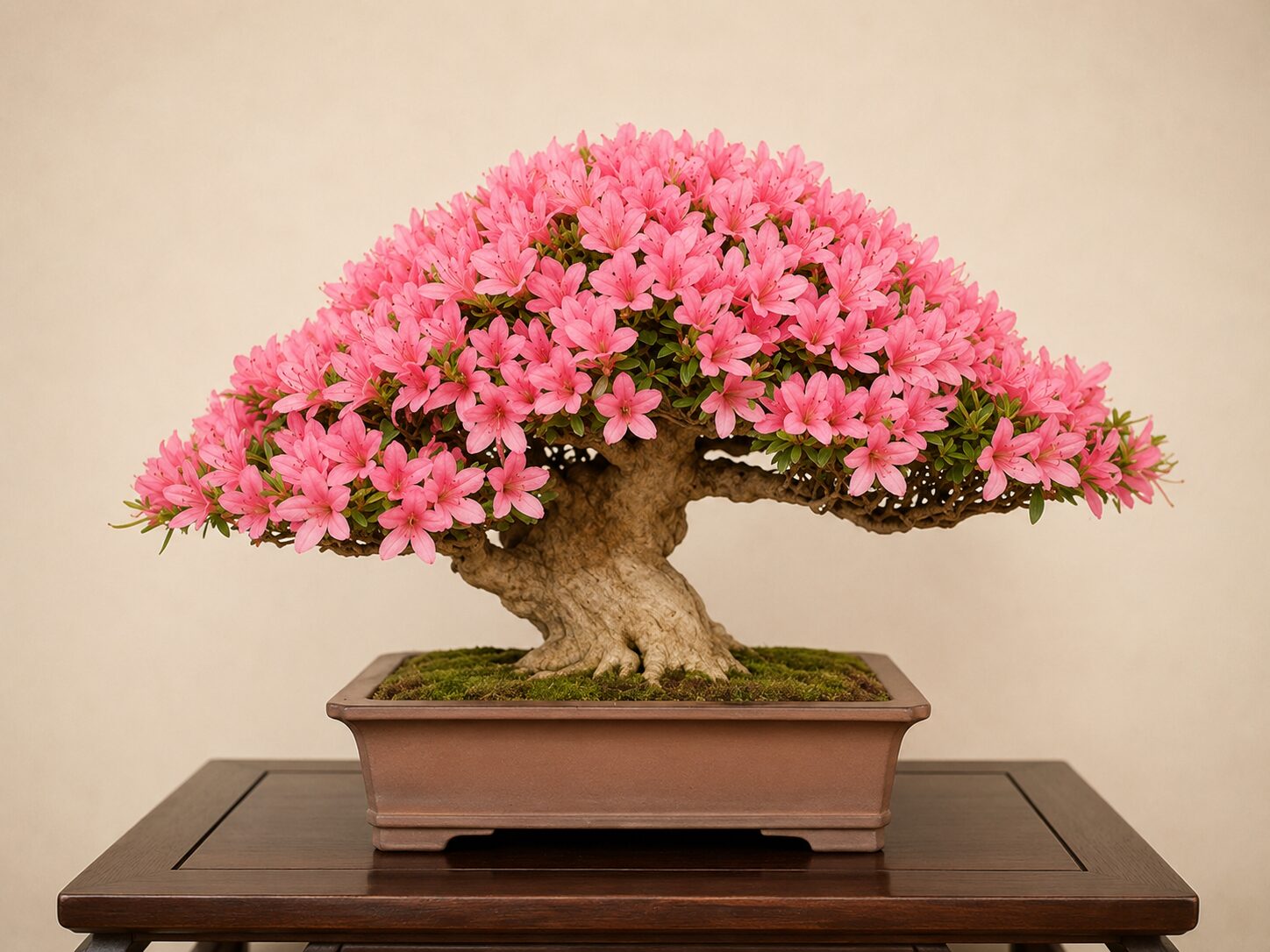
Since it is an acidic soil, it is suitable for cultivating plants that prefer acidic soil such as azaleas, azaleas, and blueberries, and for breeding killifish.
Kanuma soil contains almost no organic matter. Soil that does not contain organic matter is suitable for growing plants, as fungi and insects rarely occur.
Suitable for growing indoors. It is also effective in situations where the outbreak of pests has a large impact on plants.
When using Kanuma soil, it is necessary to mix it with other soils to adjust the acid-loving plants and pH.
- pH value of Kanuma soil: about 4.0 to 5.0
- pH value of Akadama soil: about 5.5 to 6.5
Kanuma soil is acidic in terms of pH value, which indicates acidity, while Akadama soil is weakly acidic
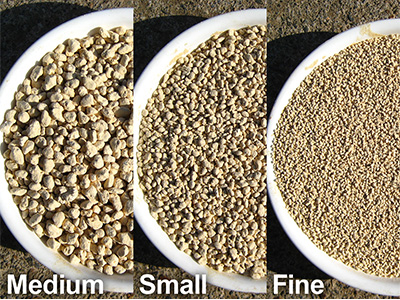
Medium grain
The medium grain size is around 1 cm, and it has a good balance of drainage and water retention.
It can be used as soil, not as a bottom stone like a large grain. Suitable for large bonsai and ornamental plants.
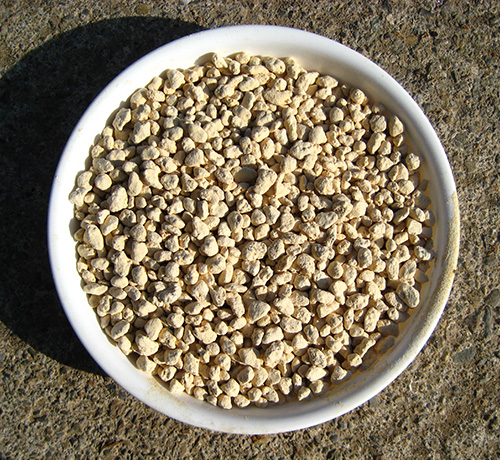
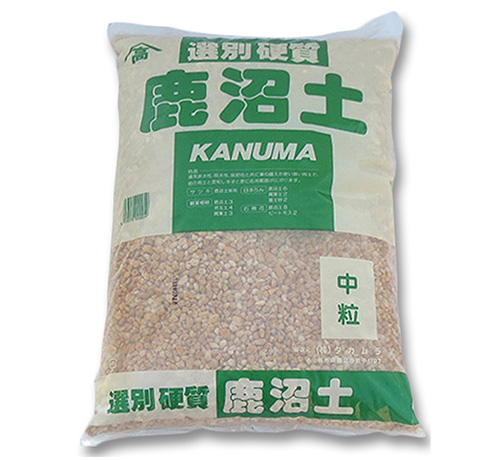
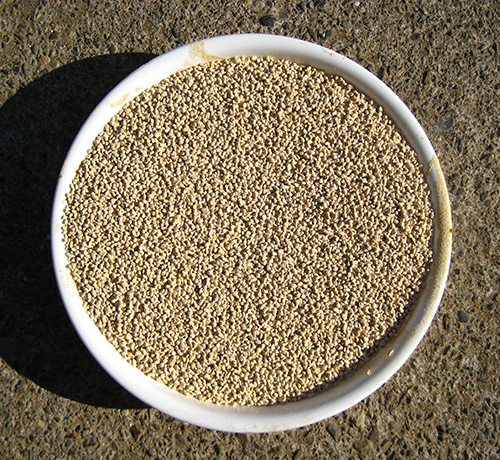
Small grain
The granules are around 5mm in size. It has a good balance of drainage and water retention, making it suitable for raising seedlings.
It can be used in almost the same way as soil, so use it for acid-loving plants.
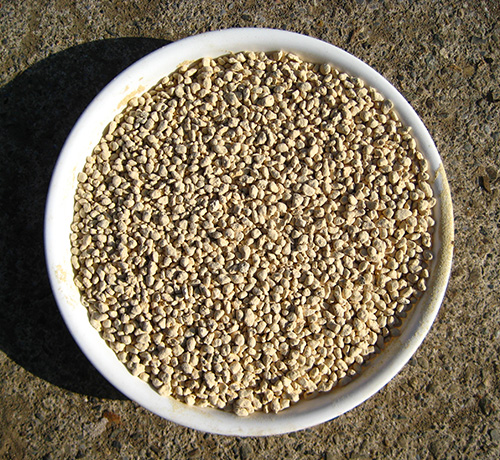
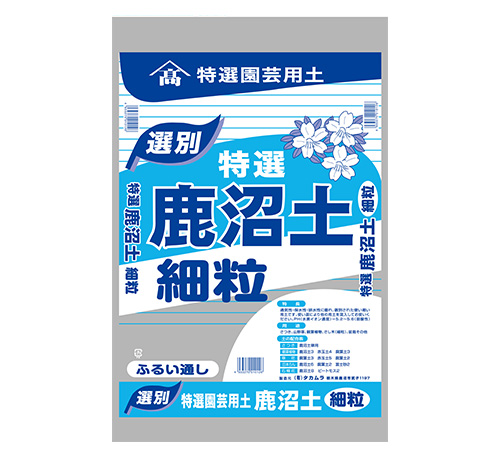
Fine grains
Fine particles and fine dust are the same size as soil.
Although the drainage is inferior to large grains, it is suitable for small plants because it has high water retention.
However, care must be taken when using Kanuma soil as it has excellent drainage. Fine granules and fine dust do not have extremely good drainage, so if you give them too much water, there is a high possibility of root rot.
On the other hand, it is a size that is easy to use for raising seedlings that you do not want to run out of water.
If you would like to purchase, please write the product name, size, and quantity in the message field.
Contact
Nanpeidai-cho, Shibuya-ku, Tokyo, Japan
Phone(Japan) +81 50-1722-5652
Phone(Malaysia) +60 10-246-6656